
In 2025, a photograph costs nothing.
Not in money, not in time, not in thought. You point, tap, and the image exists — ready to be shared, deleted, or forgotten within the hour. There is no shortage of photographs. By some estimates, the world produces more images in two minutes today than were produced in the entire nineteenth century.
And yet something has changed about what a photograph means.
When anything can be photographed, everything is photographed. And when everything is photographed, nothing quite demands attention. The image has become environmental noise — present everywhere, processed unconsciously, leaving almost no trace.
I started shooting film because I could not afford digital. I kept shooting film because it changed how I think.
The Discipline of Scarcity
A roll of black-and-white 35mm film gives me 36 frames. A roll of medium format gives me 12. Each frame costs something — money for the film, money for the development, and something less tangible: the awareness that this chance is limited.
Before I press the shutter, I wait. I look longer. I ask myself: is this the moment? Is this the light? Is this worth one of twelve frames?
Digital photography made me lazy. Analog photography made me patient.
Patience, I have come to believe, is not just a virtue for photographers. It is the difference between a record and an image. A record documents that something happened. An image holds what it felt like.
The Weight of the Negative
After shooting, the negative exists. A physical thing — a strip of acetate with silver particles arranged by light. You can hold it up to a window and see it. You can damage it, lose it, preserve it. It has consequences.
Digital files feel different. Not worse, necessarily — but lighter. A JPEG can be duplicated infinitely with no loss. It can exist on a thousand servers simultaneously. It can be deleted without a trace in a fraction of a second.
A negative is the opposite. There is exactly one. If it is lost, the image is gone.
This is not romantic nostalgia. It is a different relationship with impermanence.
The knowledge that a moment has been captured on something physical — something that can be touched, that occupies space — changes how I feel about it. The photograph becomes less of a record and more of an object. More like a drawing than a data point.
The Image That Costs Something
There is a theory in economics that what costs something tends to be valued. What is free tends to be treated as disposable.
I believe this applies to images.
The photographs that matter to me most are the ones that required something — a long wait, a specific film, a deliberate choice. They are not always the technically best images. They are the ones I remember making.
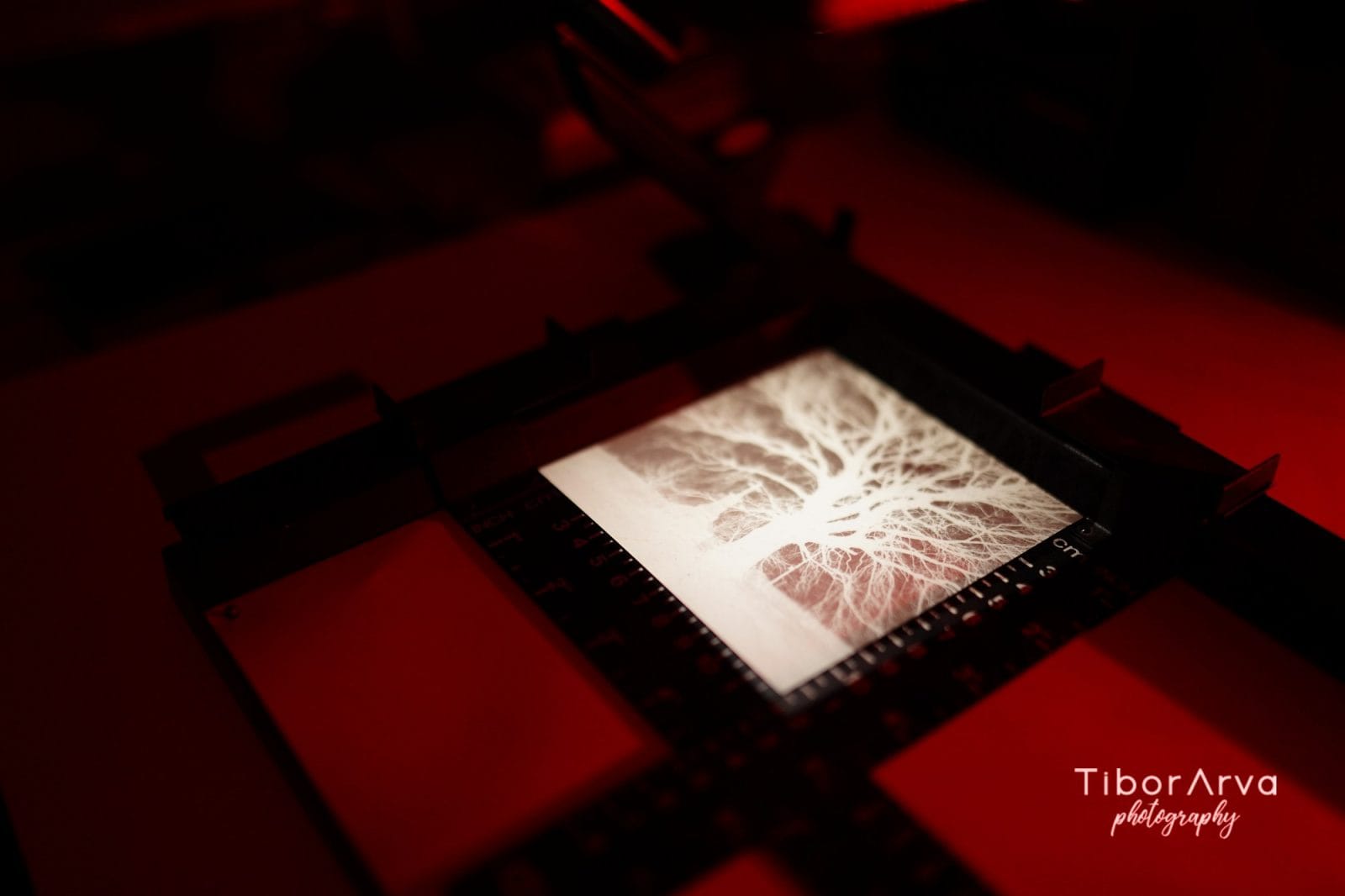
When these photographs become silver gelatin prints — handmade, washed in running water for an hour, signed and numbered — they carry that weight forward. They are not reproductions. They are the final form of a process that began with a deliberate choice to look carefully at something.
In a world of infinite images, I make a small number of photographs that cost something to make, and that will last longer than anyone alive today.
That feels like enough.